Learning to Organise for Change: Our training with Tyne & Wear Citizens
Written by Kaltouma Hassaballah (worker-member) and Helen Simmons (Steward)
We recently joined a two-day Community Organising training with Tyne & Wear Citizens, part of the Citizens UK alliance. This network brings together 35 local organisations – including churches, mosques, schools, charities, trade unions and a university – to act together on local injustices and win change. Dwellbeing invited us to attend as we're considering joining the alliance.
Getting a seat at the table
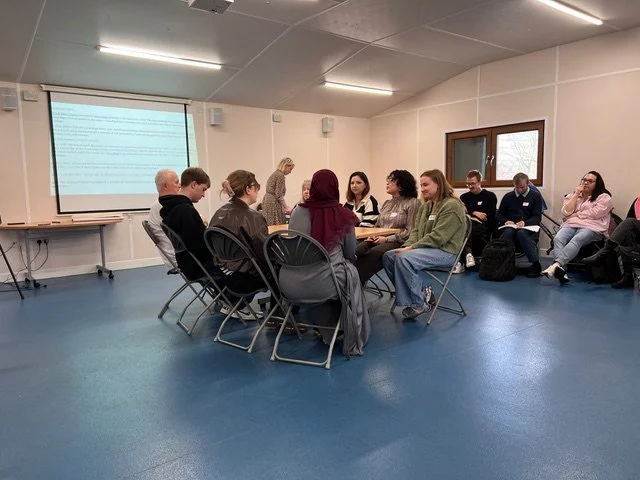
We began with a circle of introductions, where each person shared something they had helped change in their workplace or community. This created a welcoming space and helped us understand the different backgrounds and experiences in the room.
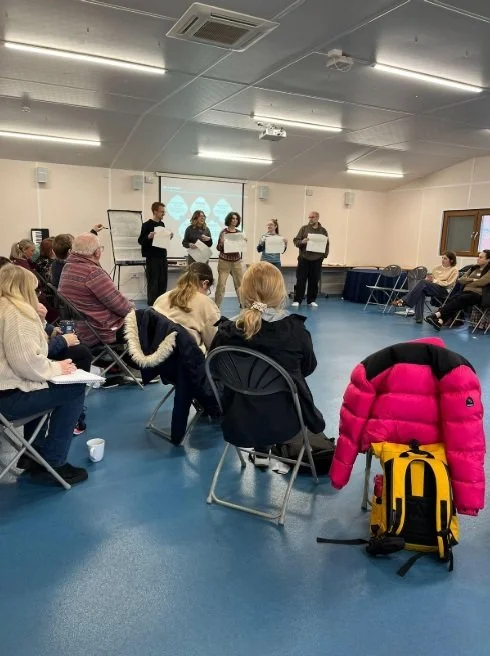
One of the key messages from Citizens is that people need to get a seat at the table where decisions are made. They say: "If you're not at the table, you're on the table." We spent the morning exploring negotiation through role-play, practising a conversation between Citizens and Newcastle United FC about the Real Living Wage. People took turns representing both sides of the argument, and we learned that negotiation isn't about proving someone wrong or winning the moral argument. It's about reaching a fair outcome and building respect between people.
The most successful negotiation teams had clear roles (spokesperson, time-keeper, note-taker), had researched who held power, and brought someone with lived experience to speak directly. Some meetings felt quite uncomfortable and tense, but as one trainer put it: "If there's no tension in the room, it's not a good meeting – tension means change is possible."
What drives us to act?
We explored what power means and how it shows up in our lives. When asked how the word made us feel, many people used words like scared, unworthy, or unconfident. Citizens distinguish between power over (hierarchical, imposed) and power with (shared, relational). Their aim is to build power with – acting together to move from the world as it is toward the world as it should be.
Another focus was self-interest – understanding what motivates us personally and why we choose to get involved in community work. Using a simple model, we mapped our key relationships, ambitions, defining moments, and how we spend our time and energy. Understanding our own motivations, and listening carefully to others, helps us find common ground and build trust. We learned that the most effective way to understand someone else's self-interest is through a one-to-one conversation in a neutral space, with no set agenda, simply learning about them and exploring whether we have common interests.
On the second day, we focused on leadership – not as a title or position, but as taking action, listening well, and supporting people to work together. The trainers asked us to consider: is anger a quality of a leader? They argued that being angry about an issue is more likely to keep someone motivated to address it. We watched a fun video about the importance of the first follower, highlighting that successful leaders must be able to bring people with them on a campaign. For Citizens, power is relational, not positional – leaders work with a community to achieve an outcome, not for them.
The power of listening
We learned about the five steps to social change: organising, listening, planning, acting and negotiating. Listening is the vital first step in understanding what matters to people and what issues they care deeply about. This can be done through one-to-one conversations, neighbourhood walks, forums, shared meals or house meetings.
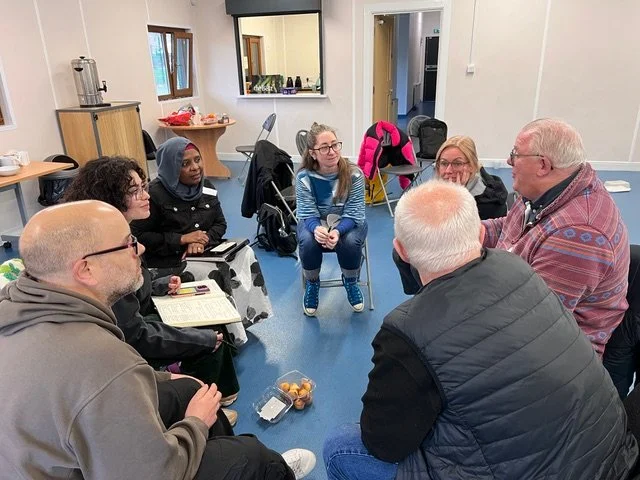
We tried out the house meeting format in smaller groups. Each person had two minutes to explain their perspective on an issue, then we had an open conversation about practical solutions. These structured conversations aim to find common themes and tangible outcomes – identifying actions that are worthwhile, achievable, ambitious and have broad impact.
A powerful example was the Elswick Park campaign, where children spoke about feeling unsafe in their park – no play equipment, poor lighting, overgrown areas, no CCTV. They wrote letters, mapped who held power, and led a meeting at their school, followed by a walk-around with the council. Their voices were so compelling that the Local Authority pledged £250,000 for improvements. The lesson was clear: successful campaigns need a plan, specific demands, an understanding of power and self-interest, and a willingness to build relationships whilst still pushing for change.
We also heard about creative campaigns, like young people in Wales who ran a 'Nando's in Cardiff Bay' campaign to encourage more halal food venues. Dressed as chickens, they travelled by bike, bus and on foot to try ordering halal chicken in various restaurants – using humour and creativity to raise serious issues with decision-makers.
What we're taking away
The training taught us a great deal about how communities can organise, negotiate and act together to create fairer and stronger neighbourhoods. We learned that successful organising means personalising issues (naming who is responsible), creating the kind of tension that leads to change, and always centring the voices and experiences of those most affected. It's about getting a seat at the table alongside decision-makers, building constructive relationships with power, and showing what change could look like.
What stayed with us most was the power of listening – really listening – to understand what people care about, especially children and young people, and then working together to turn those concerns into practical action.
So what does all of this mean for Dwellbeing? After reflecting together on these two days and our work in Shieldfield, we're drawn to the idea of building in proper one-to-ones, providing real space for people to connect without a set agenda. Dwellbeing members often meet for a fleeting coffee or to get something done together, but there's something powerful about creating time for deeper, more personal conversations. The question for us now is about rhythms and spaces: how do we find times that work across different lives – perhaps a morning breakfast, a chat before school pick-up or after work? What spaces in the community feel cosy and private enough for people to open up about what matters to them, what worries they're carrying, and what they hope for? And how might we invite those who can't make our regular Dwellbeing meetings to join conversations at times and places that suit them? What do you think? Who would you like to talk with and get to know better?